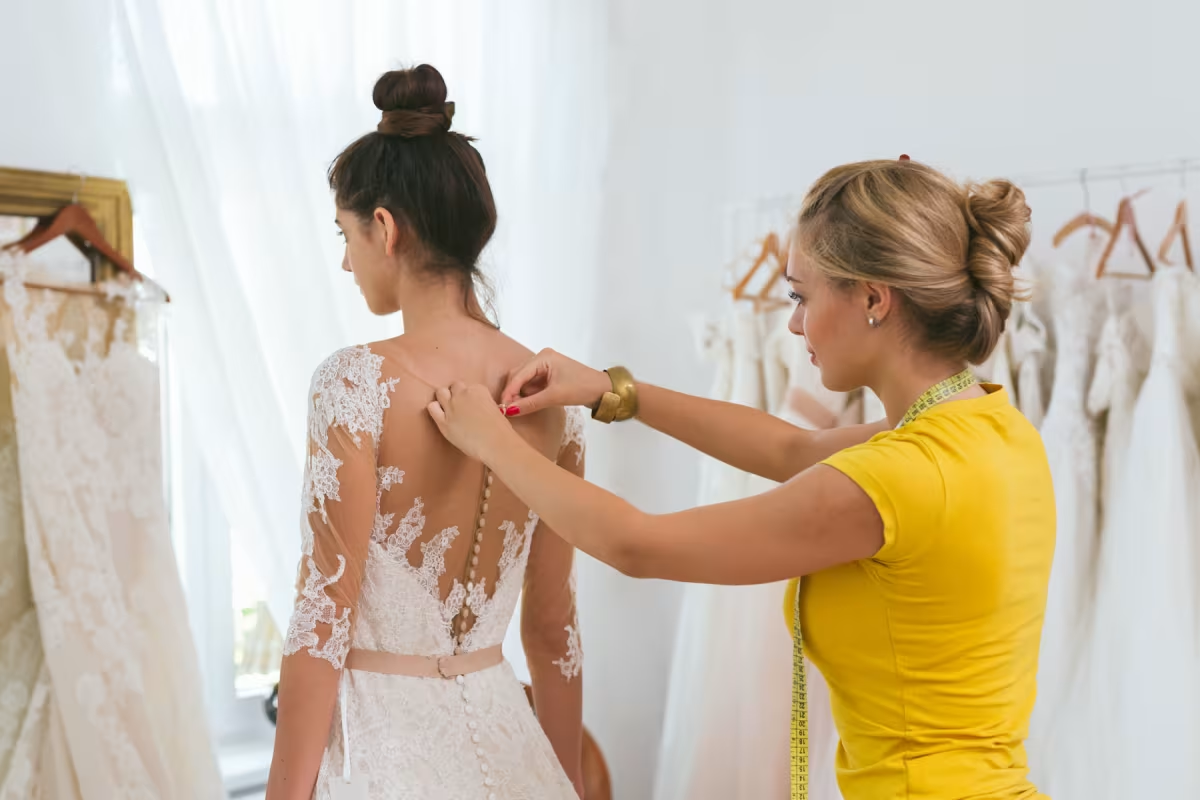
Many brides focus their dress budget entirely on the gown itself and forget to account for alterations. In reality, tailoring is an essential part of the bridal process and can dramatically affect how the final dress looks and feels.
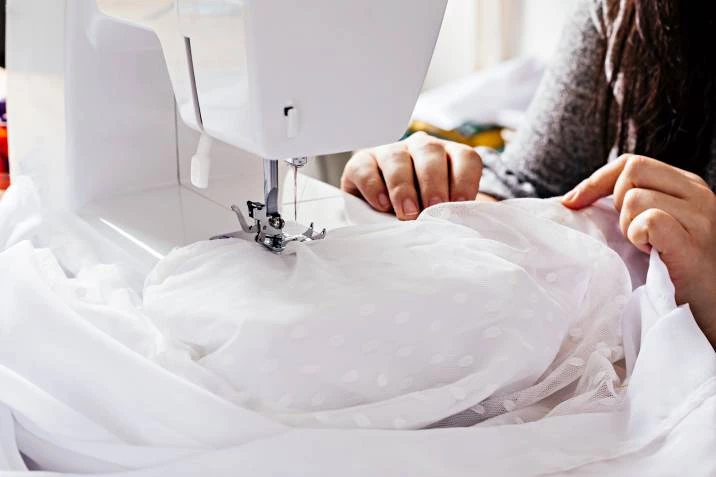
Even if a wedding dress seems to fit perfectly in the boutique, adjustments are usually necessary to achieve a truly customized fit.
Understanding alteration costs in advance can help you budget more effectively and avoid unexpected expenses.
Why Alterations Are Almost Always Necessary
Wedding dresses are manufactured according to standard sizing, while real bodies rarely fit those measurements perfectly.
Alterations help adjust:
- Length
- Bust support
- Waist fit
- Hip fit
- Strap length
- Sleeve fit
These changes ensure the gown fits comfortably and photographs beautifully.

What Affects Alteration Costs?
Several factors influence the final price of bridal tailoring.
One major factor is dress complexity. A simple crepe sheath gown is generally easier to alter than a heavily beaded ballgown.
Fabric type also matters. Delicate lace, intricate embroidery, and multiple layers require additional labor and expertise.
The number of alterations needed will naturally impact overall cost as well.
Common Wedding Dress Alterations
Most brides require at least a few standard adjustments.
These often include:
- Hemming the skirt
- Taking in the waist
- Adjusting straps
- Adding bust support
- Refining sleeve fit
More extensive modifications may involve reshaping necklines or modifying structural elements.
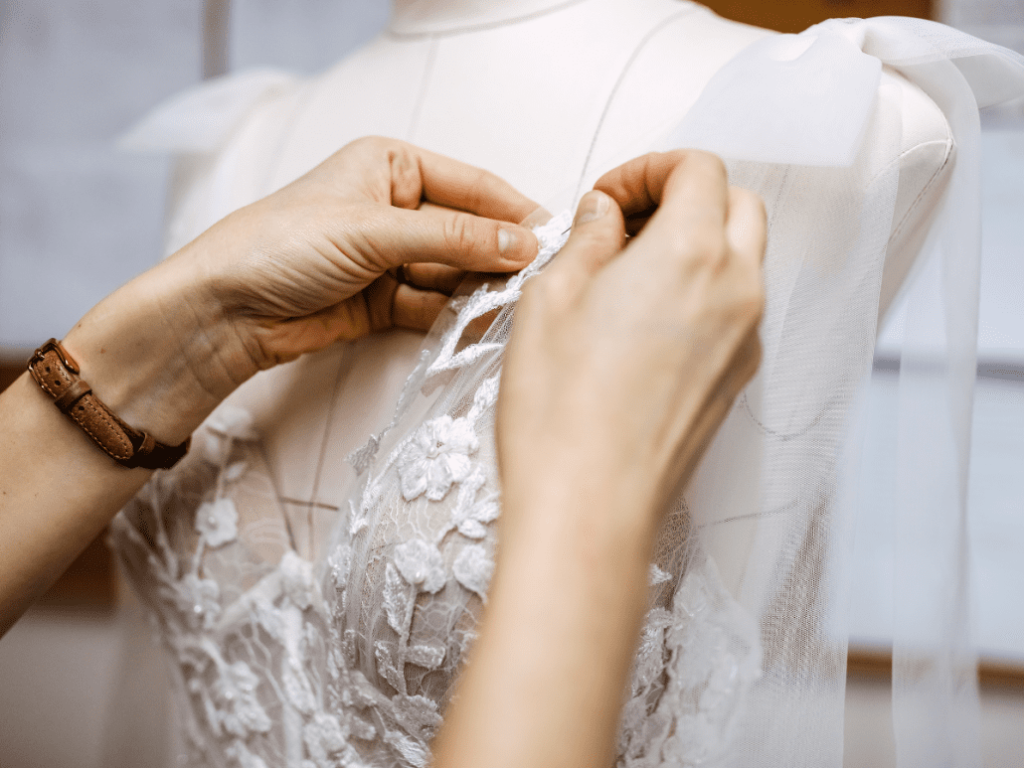
How Many Fittings Should You Expect?
Most brides attend multiple fittings before the wedding.
The process typically includes:
- Initial assessment
- Major adjustments
- Fine-tuning
- Final fitting
This timeline allows the seamstress to make precise changes gradually.
When Should Alterations Begin?
Starting too early can be problematic because body measurements may change before the wedding.
Most professionals recommend beginning alterations a few months before the event while still leaving enough time for multiple appointments.
Proper scheduling reduces stress and helps ensure the best possible result.
Final Thoughts
Wedding dress alterations are not an optional luxury—they are a crucial part of achieving the perfect fit.
Including alteration costs in your budget from the beginning helps avoid surprises and ensures your dress looks exactly as intended on your wedding day.