A wedding dress train is one of the most dramatic and memorable features of a bridal gown. As a bride walks down the aisle, the train creates graceful movement, enhances the silhouette, and adds an unmistakable sense of elegance. Whether it’s a subtle sweep train or an extravagant royal train stretching several feet behind the dress, this single design element can completely transform the overall bridal look.
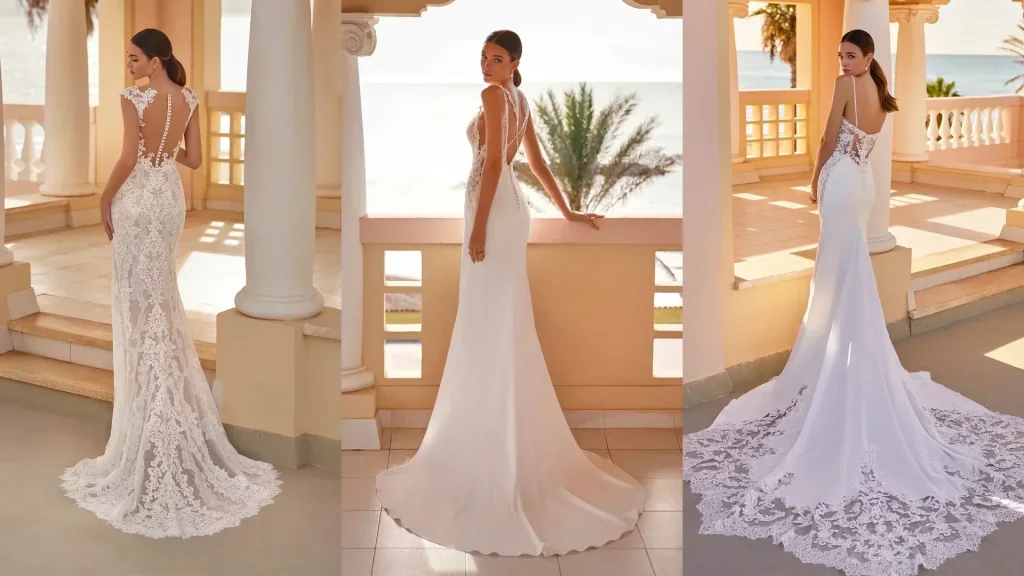
Although trains are often chosen for their beauty, they also serve a practical purpose in defining the formality of a wedding. A bride planning a beach ceremony may prefer a short, lightweight train that is easy to manage, while someone marrying in a cathedral or historic estate may dream of a dramatic train worthy of a royal entrance.
Understanding the different types of wedding dress trains makes it easier to select a gown that complements your venue, wedding style, and personal preferences.
What Is a Wedding Dress Train?
A train is the portion of the wedding dress that extends behind the skirt and trails along the floor. Its length can vary from just a few inches to several feet, depending on the style of the gown.
Historically, long trains symbolized wealth, status, and importance. Today, they remain a timeless bridal feature that creates elegant movement and unforgettable wedding photographs.
The right train should enhance the overall silhouette without making the dress uncomfortable or difficult to wear throughout the celebration.
Sweep Train
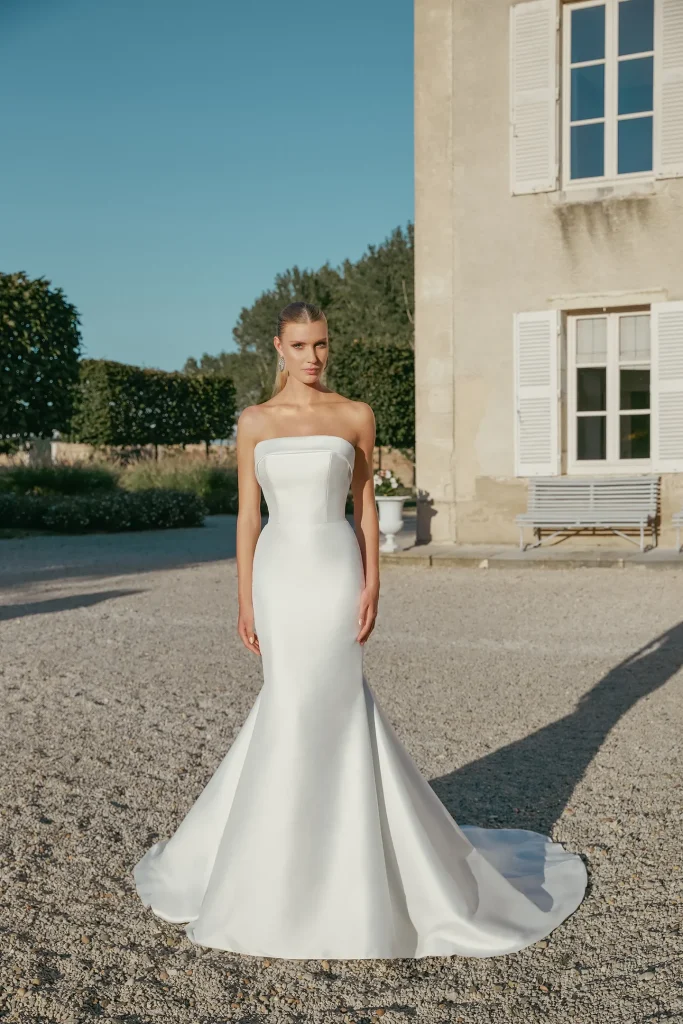
The sweep train, sometimes called a brush train, is the shortest and most understated option.
It extends only slightly beyond the hem of the dress, gently “sweeping” across the floor as the bride walks. Because of its simplicity, it is ideal for casual weddings, outdoor ceremonies, destination celebrations, and modern minimalist gowns.
Brides who want a touch of elegance without worrying about managing a long train often choose this style.
Court Train
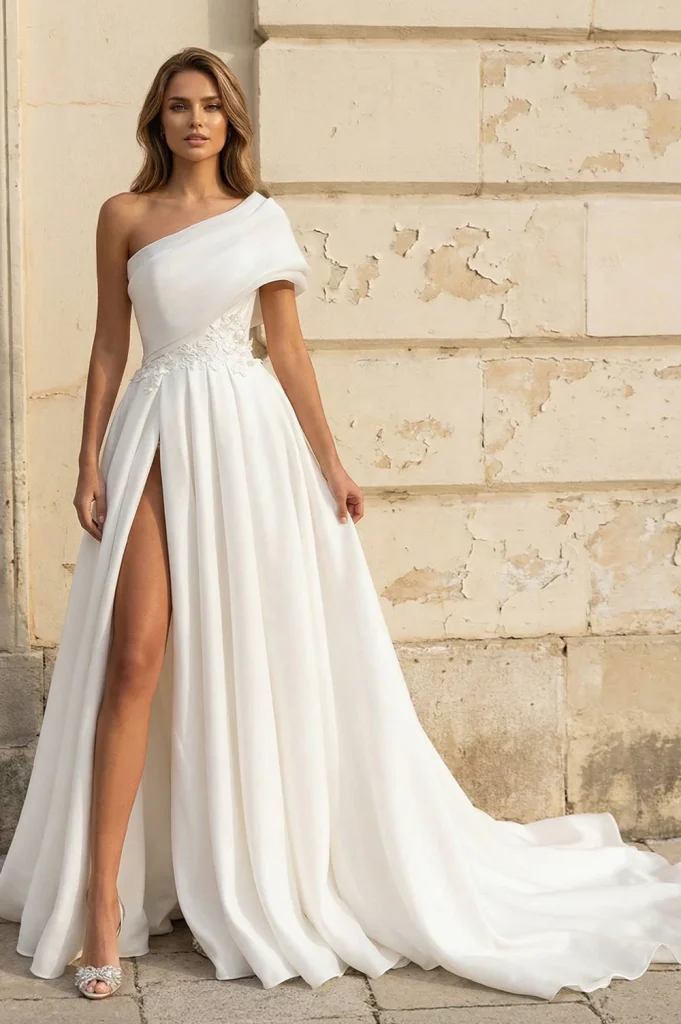
A court train is slightly longer than a sweep train and offers a more formal appearance while remaining easy to wear.
It provides graceful movement without becoming overly dramatic, making it a versatile choice for brides planning ceremonies in gardens, vineyards, or smaller churches.
Court trains pair especially well with A-line, sheath, and fit-and-flare wedding dresses.
Chapel Train
The chapel train is one of the most popular choices among modern brides.
Typically extending between four and five feet behind the gown, it creates a classic bridal silhouette that photographs beautifully without becoming impractical.
This train works well in nearly every wedding setting, including churches, hotels, historic estates, and elegant outdoor venues.
For many brides, the chapel train offers the perfect balance between sophistication and comfort.
Cathedral Train
If you’ve ever admired the dramatic entrances seen in royal weddings, you’ve likely noticed a cathedral train.
Longer than a chapel train, it creates breathtaking movement while emphasizing the grandeur of formal ceremonies.
Cathedral trains are particularly suited to:
- Churches
- Cathedrals
- Ballrooms
- Historic estates
- Luxury hotels
- Castles
Because of their length, these trains often require assistance during the ceremony and are usually secured with a bustle before the reception begins.
Royal Train
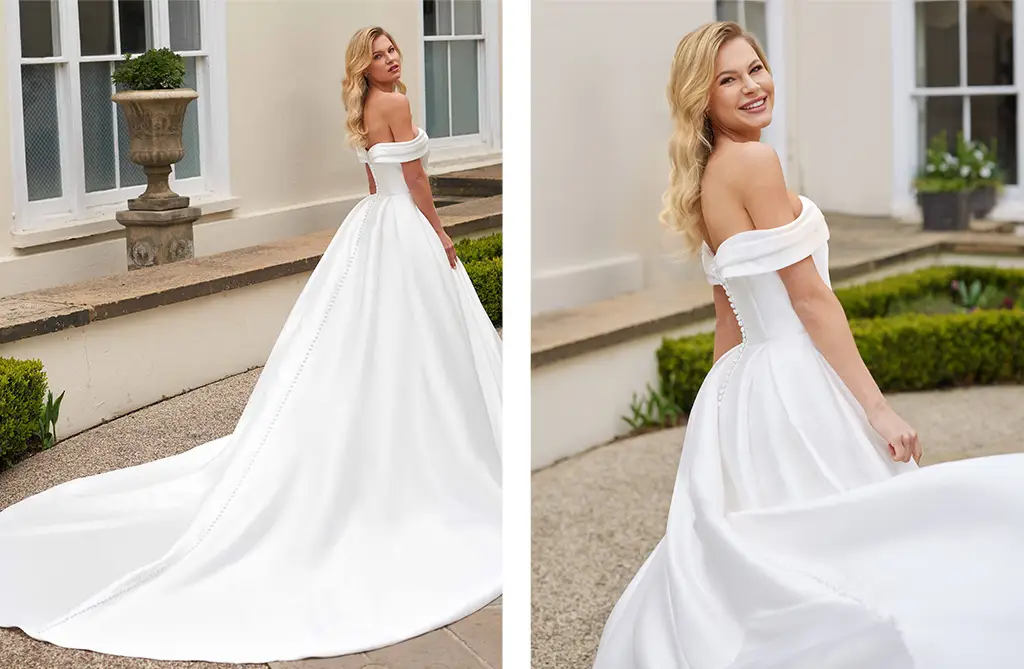
The royal train represents the most dramatic option available.
Often measuring several meters in length, it is designed for the grandest venues and highly formal celebrations. This style is rarely seen outside luxury weddings but creates unforgettable visual impact.
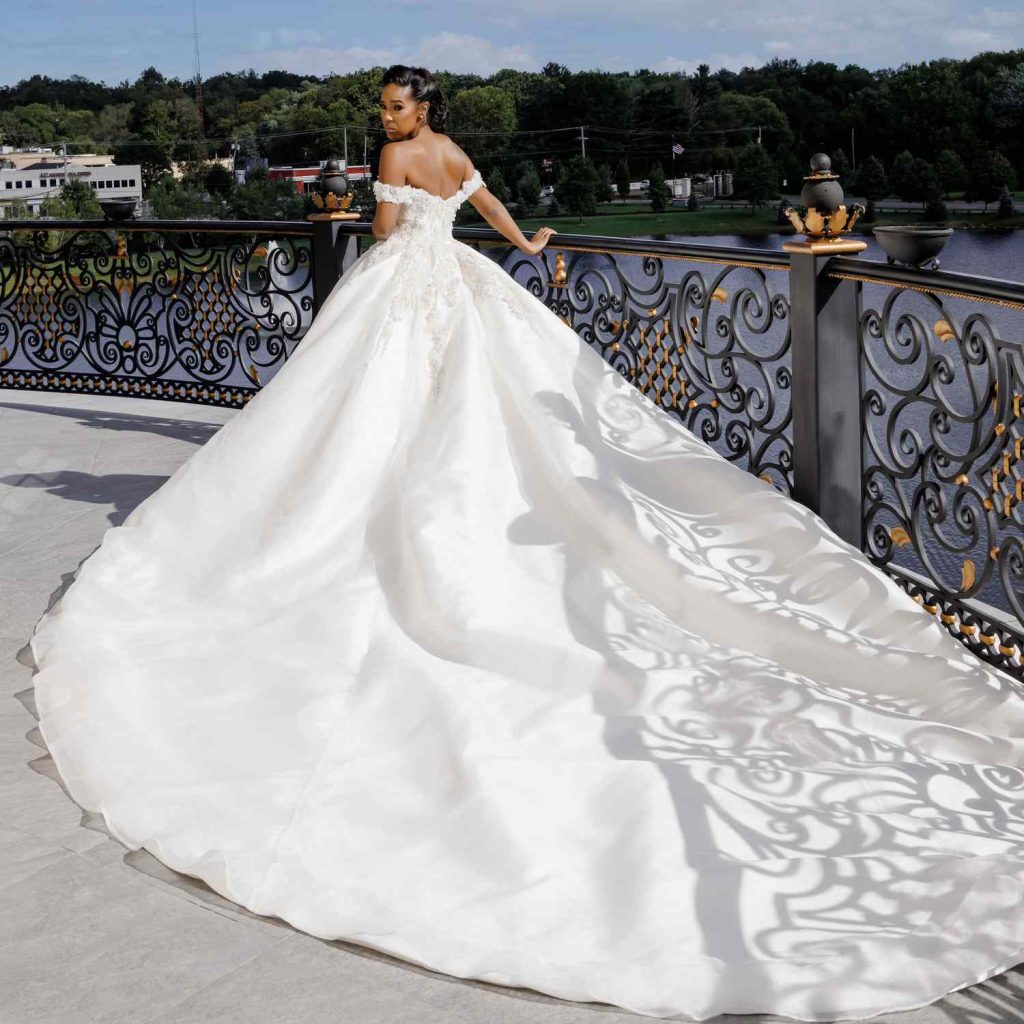
Royal trains require careful planning, additional assistance during the ceremony, and spacious venues that allow the fabric to flow naturally.
Although impractical for many weddings, they remain one of the most iconic features of royal bridal fashion.
Which Wedding Dress Silhouettes Work Best With Long Trains?
Not every silhouette creates the same visual effect.
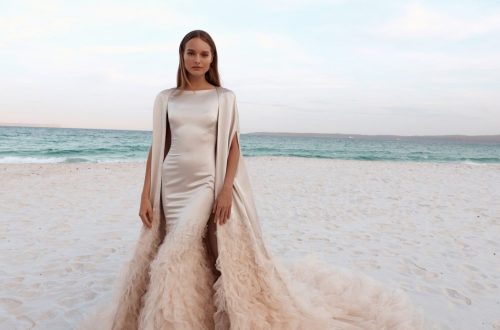
Ballgowns naturally showcase long trains thanks to their dramatic volume, while mermaid dresses emphasize the train by highlighting the body’s curves before flaring outward.
A-line dresses remain the most versatile option because they complement nearly every train length.
Minimalist sheath gowns can also look incredibly elegant with cathedral or chapel trains, allowing the flowing fabric to become the focal point of the entire bridal look.
How to Choose the Right Train for Your Venue
Your wedding venue should influence your decision just as much as your personal style.
Consider the following:
- Outdoor gardens often suit sweep or court trains.
- Beach weddings usually benefit from shorter trains that won’t collect sand.
- Churches pair beautifully with chapel or cathedral trains.
- Grand ballrooms accommodate dramatic cathedral styles.
- Historic estates allow longer trains to shine in photographs.
Thinking about how you’ll move throughout the day is just as important as the visual appearance.
Living With a Wedding Dress Train
Many brides worry that a train will become uncomfortable after the ceremony.
Fortunately, almost every modern wedding dress can be fitted with a bustle during alterations. A bustle lifts and secures the train, making it much easier to walk, dance, and socialize during the reception.
Before your wedding day, ask your seamstress to demonstrate exactly how the bustle works. It’s also helpful to have a bridesmaid or family member learn the process, as fastening the train correctly often requires a few minutes.
With proper alterations, even dramatic cathedral trains can become surprisingly manageable after the ceremony.
Frequently Asked Questions
Which wedding dress train is the most popular?
The chapel train is generally considered the most popular because it balances elegance with practicality.
Can you shorten a wedding dress train?
Yes. Professional seamstresses can shorten many trains during alterations if desired.
Do all wedding dresses need a bustle?
Not always, but dresses with chapel, cathedral, or royal trains usually benefit from one for the reception.
Is a long train suitable for outdoor weddings?
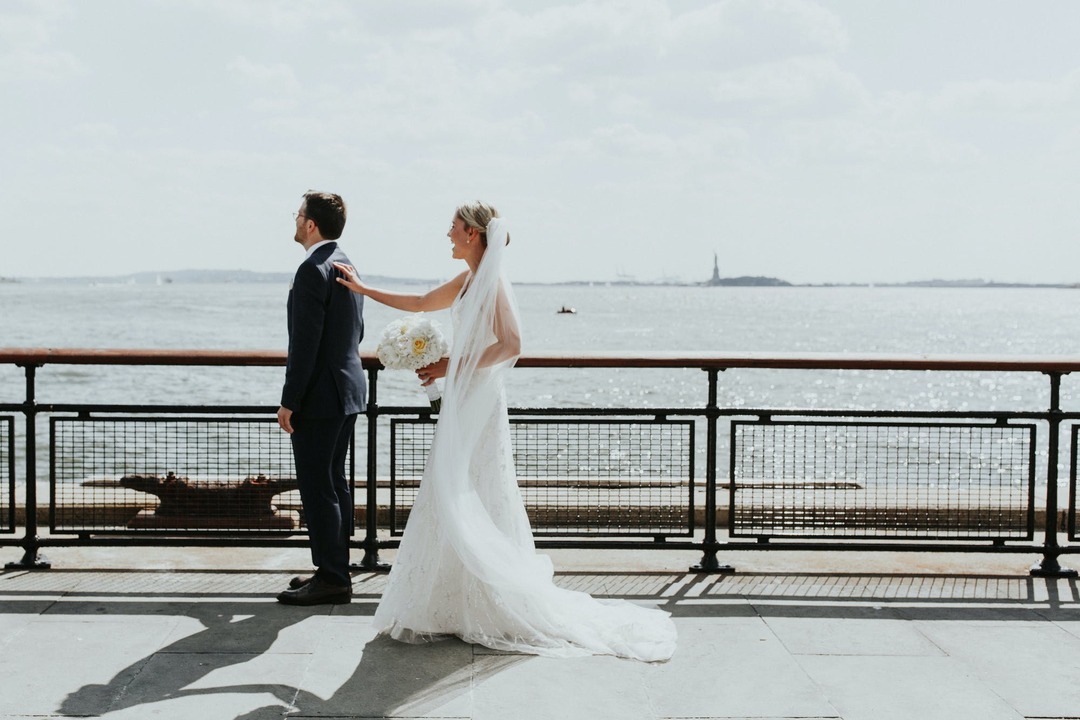
It depends on the venue. Smooth stone pathways work well, while sand, mud, or uneven terrain may make shorter trains more practical.
Final Thoughts
A wedding dress train adds elegance, movement, and timeless beauty to almost any bridal gown. Whether you choose a subtle sweep train for an intimate garden ceremony or a breathtaking cathedral train for a grand church wedding, the right length should complement both your venue and your personal style.
Rather than selecting the longest train simply for dramatic effect, think about how you’ll experience your wedding day from beginning to end. A train that feels comfortable, suits your surroundings, and enhances your dress will always create the most memorable bridal look.