Planning a wedding is one of the most exciting experiences in life, but it can also feel overwhelming. Between choosing a venue, setting a budget, finding the perfect wedding dress, hiring vendors, sending invitations, and organizing the ceremony, there are hundreds of decisions to make before your big day arrives.
The good news is that successful wedding planning isn’t about being perfect—it’s about staying organized and making decisions one step at a time. Whether you’re planning an intimate celebration for twenty guests or a grand event with hundreds of attendees, the same fundamental principles apply. A clear timeline, realistic budget, and thoughtful priorities will make the process significantly more enjoyable.
This guide walks you through every major stage of wedding planning, from the moment you get engaged until the day you say “I do.” Along the way, you’ll learn practical tips, common mistakes to avoid, and expert recommendations that can save both time and money.
Before You Start Planning
Before booking venues or trying on wedding dresses, take time to discuss your expectations as a couple.
Many planning challenges arise because partners assume they want the same type of wedding without ever discussing the details. A relaxed outdoor celebration feels very different from a formal ballroom reception, and both require different budgets, vendors, and timelines.

Talk openly about your priorities. Consider questions such as:
- Do you want a large or intimate wedding?
- Would you prefer a local celebration or a destination wedding?
- Is your focus on luxury, simplicity, or guest experience?
- Which traditions matter most to both of you?
- What aspects of the wedding are you willing to compromise on?
Having these conversations early creates a strong foundation for every decision that follows.
Step 1: Set Your Wedding Budget
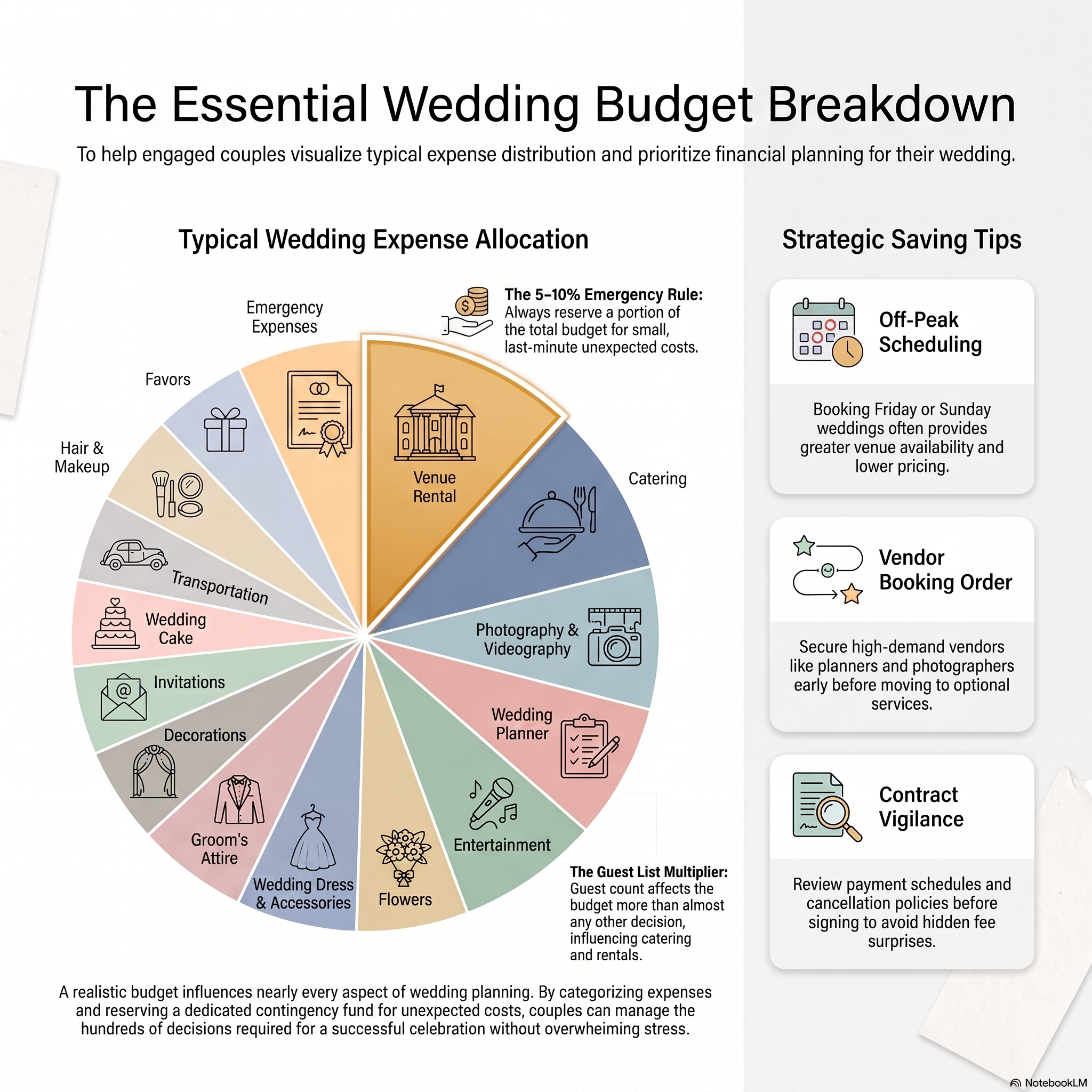
Your budget influences nearly every aspect of the wedding.
Before researching venues or contacting vendors, determine how much you’re comfortable spending. If family members are contributing financially, discuss those arrangements early to avoid misunderstandings later.
Instead of thinking only about the total amount, divide your budget into categories.
Typical wedding expenses include:
- Venue rental
- Catering
- Wedding dress and accessories
- Groom’s attire
- Photography and videography
- Flowers
- Entertainment
- Invitations
- Wedding planner or coordinator
- Transportation
- Wedding cake
- Hair and makeup
- Decorations
- Marriage license
- Favors and gifts
- Emergency expenses
Always reserve approximately 5–10% of your total budget for unexpected costs. Nearly every wedding includes small last-minute expenses that weren’t part of the original plan.
TIP
Step 2: Create Your Guest List
The number of guests directly affects your budget more than almost any other decision.
Before touring venues, create a preliminary guest list. You don’t need every name finalized, but having an estimated guest count helps narrow your venue options and provides more accurate catering estimates.
Many couples begin with a larger list and gradually reduce it as they compare costs.
When creating your guest list, think about:
- Immediate family
- Extended relatives
- Close friends
- Coworkers
- Childhood friends
- Plus-one policy
- Children at the wedding
Remember that every additional guest influences seating, catering, invitations, rentals, favors, and overall logistics.
Step 3: Choose Your Wedding Style
Your wedding style acts as the blueprint for nearly every visual decision you’ll make.
Rather than selecting random decorations or colors, define the overall atmosphere you want to create.
Popular wedding styles include:
- Classic
- Romantic
- Modern
- Minimalist
- Rustic
- Bohemian
- Luxury
- Garden
- Coastal
- Vintage
- Industrial
- Fairytale
Once you’ve identified your preferred style, decisions about flowers, invitations, wedding dress styles, attire, décor, and even photography become much easier because everything follows a consistent direction
Creating a mood board using Pinterest or similar platforms can help you identify recurring colors, textures, and design elements that naturally appeal to you.
Step 4: Choose Your Wedding Date

Many couples already have a meaningful date in mind, but flexibility can provide significant advantages.
Consider the season, local weather, venue availability, travel requirements for guests, and holiday weekends before making a final decision.
Each season offers unique benefits.
If your dream venue is fully booked, consider Friday or Sunday weddings, which often provide greater availability and lower pricing.
Step 5: Book Your Wedding Venue
Your venue is usually the first major booking because many other decisions depend on it.
When visiting venues, don’t focus solely on appearance. Think about how the space functions throughout the day.
Ask questions such as:
- How many guests can the venue accommodate?
- What happens if the weather changes?
- Is there adequate parking?
- Are tables and chairs included?
- Is catering provided in-house?
- What are the setup and cleanup policies?
- Are there noise restrictions?
- Is there a backup ceremony location?
Take photographs during every venue tour and compare your notes afterward. After visiting several locations, details can easily begin to blend together.
TIP
Step 6: Build Your Wedding Planning Timeline
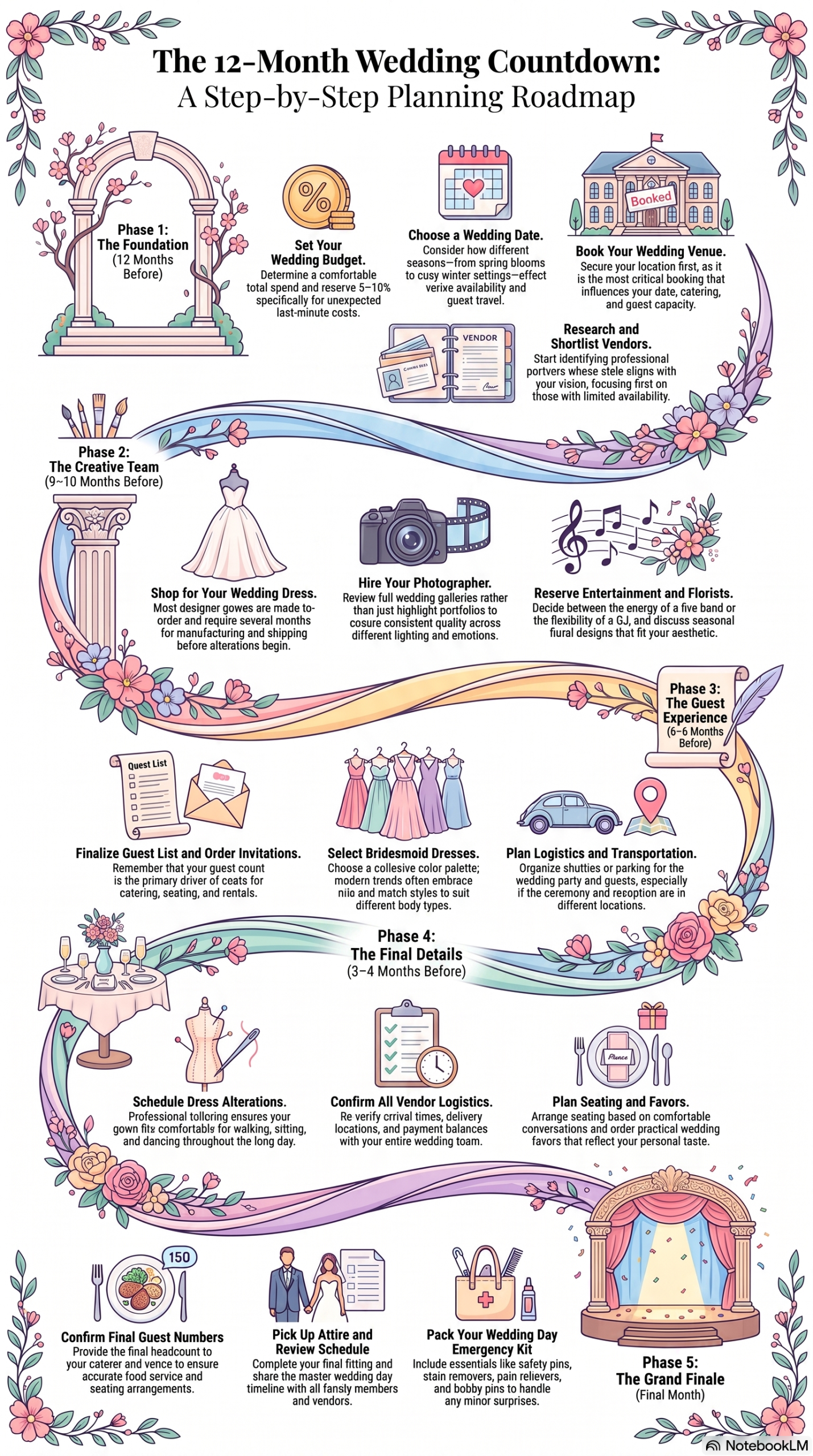
One of the simplest ways to reduce stress is to divide planning into manageable milestones.
Instead of thinking about hundreds of individual tasks, organize everything by month.
A typical timeline looks something like this:
12 months before
- Set your budget.
- Choose a wedding date.
- Book the venue.
- Begin researching vendors.
9–10 months before
- Shop for your wedding dress.
- Hire your photographer.
- Reserve entertainment.
- Choose your florist.
6–8 months before
- Order invitations.
- Finalize your guest list.
- Select bridesmaid dresses.
- Plan transportation.
3–4 months before
- Schedule dress alterations.
- Confirm vendors.
- Plan seating arrangements.
- Order wedding favors.
Final month
- Confirm guest numbers.
- Pick up your wedding attire.
- Review the wedding day schedule.
- Pack emergency supplies.
- Enjoy the final countdown instead of making major decisions.
Breaking planning into stages prevents everything from feeling urgent at the same time.
Step 7: Hire Your Wedding Vendors
Once you’ve secured your venue and chosen your wedding date, it’s time to build the team that will bring your vision to life. Every vendor plays a different role, and while some are absolutely essential, others depend on your priorities, budget, and wedding style.
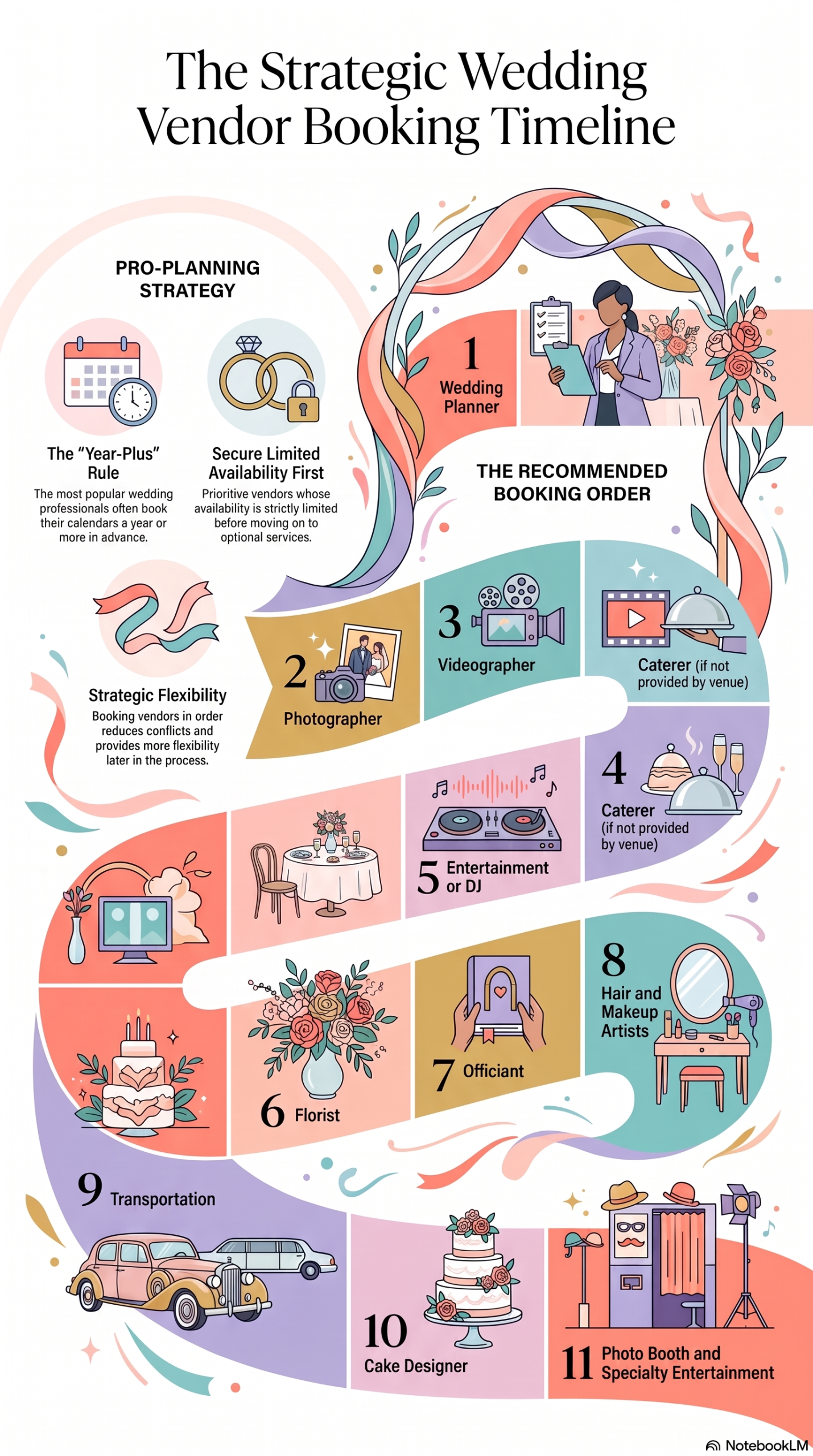
The most popular professionals often book their calendars a year or more in advance, especially for peak wedding season. If you already know there’s a photographer, florist, or planner you absolutely want to work with, contact them as early as possible.
Rather than hiring vendors in a random order, focus on those whose availability is limited before moving on to optional services.
Which Vendors Should You Book First?
Although every wedding is different, most couples benefit from booking vendors in the following order:
- Wedding planner (if you’re hiring one)
- Photographer
- Videographer
- Caterer (if not provided by the venue)
- Entertainment or DJ
- Florist
- Officiant
- Hair and makeup artists
- Transportation
- Cake designer
- Photo booth and specialty entertainment
Booking vendors strategically reduces scheduling conflicts and gives you more flexibility later in the planning process.
How to Choose the Right Wedding Photographer

Your wedding photographs will likely become the most enduring record of your celebration, making photography one of the most important investments you’ll make.
Rather than comparing photographers based solely on price, pay close attention to their style.
Ask yourself:
- Do their photos feel natural or heavily posed?
- Are skin tones consistent across different weddings?
- Do they capture emotions as well as details?
- Is their editing style timeless?
- Do they perform well in different lighting conditions?
Always request to see complete wedding galleries rather than highlight portfolios. A carefully selected Instagram feed only shows the very best images, while a full gallery reveals how consistently a photographer performs throughout an entire wedding day.
TIP
Questions to Ask Before Hiring a Photographer
During consultations, prepare a list of questions in advance.
Important topics include:
- How many weddings have you photographed?
- What happens if you’re unable to attend?
- How long after the wedding will photos be delivered?
- How many edited images are included?
- Is a second photographer available?
- Do you have experience at our venue?
- How are photos backed up?
The answers often reveal more about professionalism than the portfolio itself.
Choosing Between a DJ and a Live Band
Entertainment shapes the atmosphere of your reception more than many couples expect.
A professional DJ offers flexibility, can quickly adjust playlists based on guest energy, and usually costs less than hiring multiple musicians.
Live bands create an unforgettable atmosphere and bring unique energy to the dance floor, but they typically require larger budgets, additional space, and scheduled performance breaks.
Some couples combine both by hiring live musicians for the ceremony and cocktail hour before transitioning to a DJ for the reception.
Finding the Perfect Florist
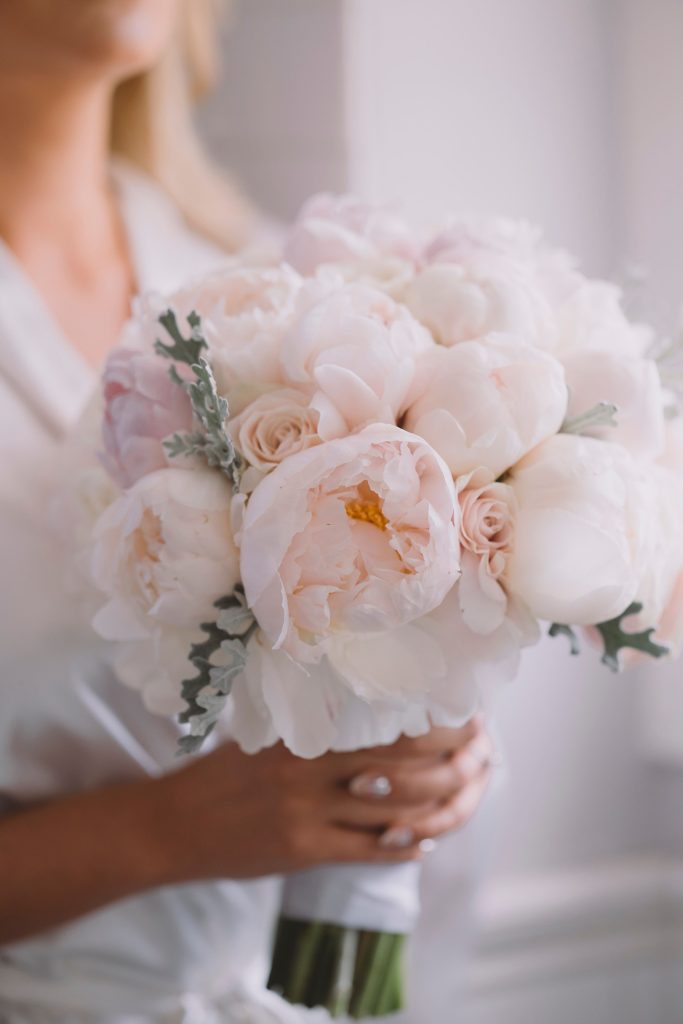
Flowers influence the visual identity of your wedding.
When meeting florists, discuss not only bouquets but the complete floral design.
Consider:
- Ceremony arrangements
- Reception centerpieces
- Bridal bouquet
- Bridesmaid bouquets
- Boutonnieres
- Welcome signs
- Cake flowers
- Floral arches
Bring inspiration photos, but remain flexible. Experienced florists often recommend seasonal flowers that achieve a similar aesthetic while reducing overall costs.
Should You Hire a Wedding Planner?
Many couples assume wedding planners are only for luxury weddings, but that’s far from reality.
A planner can save significant time, reduce stress, negotiate with vendors, and help avoid expensive mistakes.
There are generally three levels of planning support:
- Full-service planning
- Partial planning
- Day-of coordination
If you enjoy organizing but want someone to manage logistics on the wedding day, a day-of coordinator may provide the perfect balance.
Hair and Makeup Artists
Professional beauty services are about much more than appearance.
Experienced bridal stylists understand how makeup and hairstyles perform during long wedding days, emotional moments, photography, changing weather, and different lighting conditions.
Whenever possible, schedule a trial appointment several weeks before the wedding.
This gives you an opportunity to test different hairstyles, makeup looks, and accessories while making adjustments before the big day.
Avoid making major changes to your haircut or hair color immediately before the wedding unless you’ve already worked with the stylist.
Wedding Transportation
Transportation is often overlooked until the final weeks of planning.
Think beyond simply arriving at the ceremony.
Consider transportation for:
- The couple
- Wedding party
- Family members
- Guests staying at hotels
- Late-night departures
If your ceremony and reception take place at different locations, organized transportation helps keep the schedule running smoothly while improving the guest experience.
Wedding Cake or Dessert Table?
Traditional wedding cakes remain popular, but many couples are choosing alternative dessert experiences.
Options include:
- Tiered wedding cake
- Cupcake display
- Dessert buffet
- Donut wall
- French pastries
- Mini cheesecakes
- Gelato station
- Macarons
- Cookies
Your dessert should reflect both your personal taste and the overall style of the wedding rather than following tradition simply for its own sake.
Read Contracts Carefully
Excitement can make it tempting to sign contracts immediately after finding a vendor you love.
Before committing, carefully review every agreement.
Pay particular attention to:
- Payment schedule
- Deposit requirements
- Cancellation policies
- Rescheduling terms
- Overtime fees
- Delivery times
- Setup responsibilities
- Insurance requirements
If anything seems unclear, ask for clarification before signing.
A well-written contract protects both you and the vendor while preventing misunderstandings later.
Build Strong Relationships With Your Vendors
Your vendors are more than service providers—they become part of your wedding team.
Clear communication, realistic expectations, and mutual respect often lead to a smoother planning experience and even better results.
Respond to emails promptly, provide requested information on time, and avoid making frequent last-minute changes unless absolutely necessary.
Professional vendors appreciate organized couples, and that positive relationship often translates into a more relaxed and enjoyable wedding day.
Step 8: Finding the Perfect Wedding Attire
Choosing what you’ll wear on your wedding day is one of the most memorable parts of the planning process. While the wedding dress naturally receives the most attention, your complete wedding-day look includes far more than a gown. Shoes, accessories, jewelry, tailoring, hairstyles, and even the groom’s attire all contribute to creating a cohesive and elegant appearance.
Many brides spend months searching for the perfect dress, only to discover that the experience is much more enjoyable when approached with realistic expectations and a clear plan.
Remember that your goal isn’t to find the “most beautiful dress ever made.” It’s to find the dress that makes you feel comfortable, confident, and authentically yourself.
When Should You Start Wedding Dress Shopping?
Timing is one of the biggest factors in a successful dress-shopping experience.
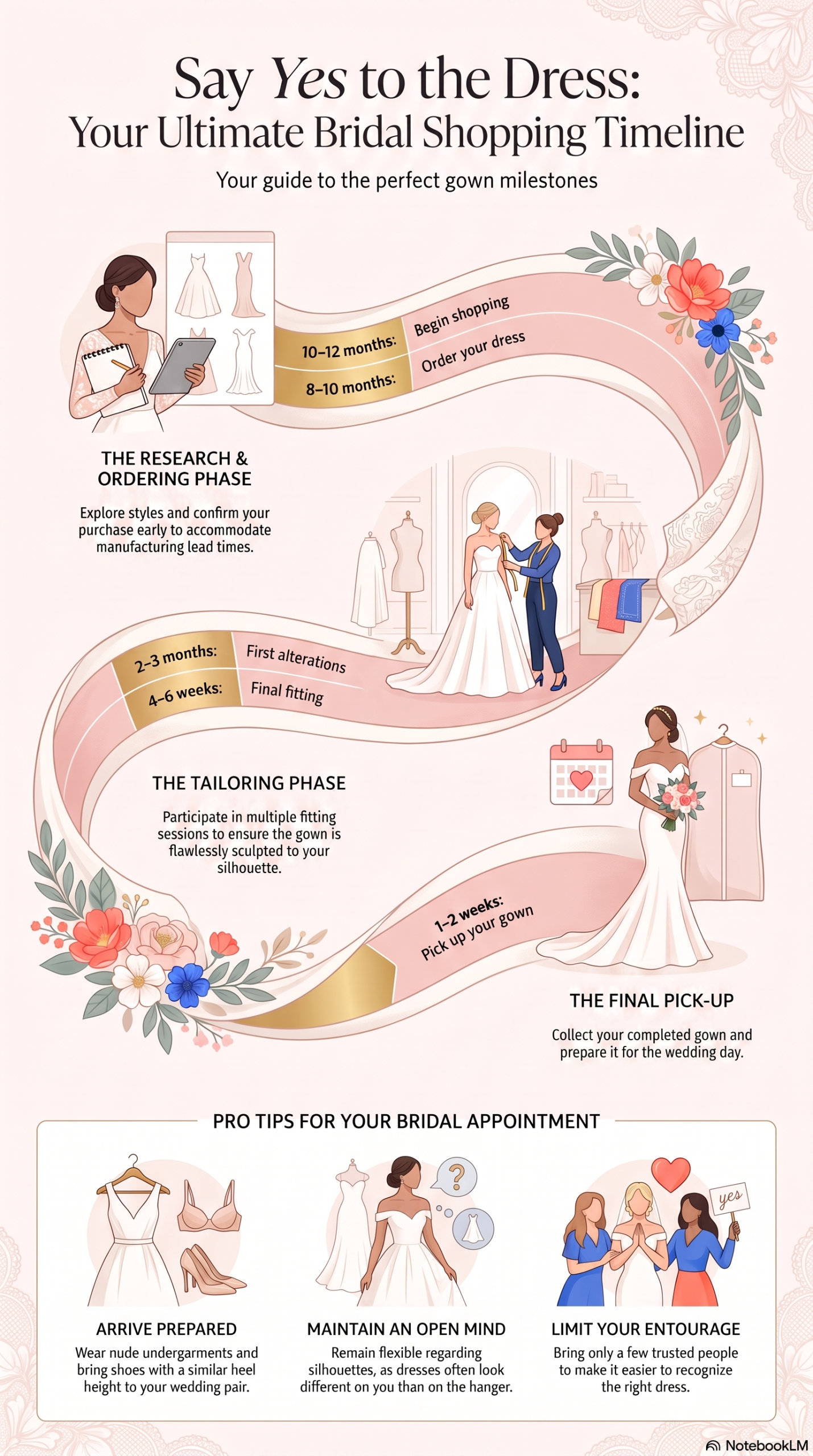
Most designer wedding dresses are made to order, meaning production begins only after your order has been placed. Depending on the designer, manufacturing, shipping, and boutique processing may take several months before the gown even arrives for alterations.
As a general guideline:
| Timeline Before Wedding | Recommended Task |
|---|---|
| 10–12 months | Begin shopping |
| 8–10 months | Order your dress |
| 2–3 months | First alterations |
| 4–6 weeks | Final fitting |
| 1–2 weeks | Pick up your gown |
Planning ahead gives you access to a wider selection of designers while reducing the likelihood of paying expensive rush fees.
How to Prepare for Your First Bridal Appointment
Walking into a bridal boutique without any preparation can quickly become overwhelming.
Before your appointment, spend some time researching different silhouettes, necklines, fabrics, and designers. Create a collection of inspiration photos, but remain open-minded throughout the process.
Many brides ultimately choose a gown that looks completely different from what they originally imagined.
For the best experience:
- Wear nude undergarments.
- Bring comfortable shoes with a similar heel height.
- Limit your shopping group to a few trusted people.
- Stay hydrated and allow plenty of time.
- Keep an open mind when trying different silhouettes.
The fewer outside opinions you receive, the easier it becomes to recognize the dress that genuinely feels right.
Understanding Wedding Dress Silhouettes
One of the first things bridal consultants discuss is silhouette.
The silhouette determines how the dress fits and flows over your body, making it one of the most important factors in both comfort and appearance.
The most popular silhouettes include:
- A-Line
- Ball Gown
- Mermaid
- Trumpet
- Sheath
- Fit-and-Flare
- Empire Waist
Rather than focusing on current trends, choose a silhouette that complements your body shape, wedding venue, and personal style.
TIP
Trying on several different silhouettes is often the quickest way to discover what feels most natural.
For more details, read our complete guide – https://www.bridellee.com/discover-the-ultimate-guide-to-wedding-dress-silhouettes-learn-about-a-line-mermaid-ballgown-and-more-styles-to-find-your-perfect-bridal-gown-in-2026/
Choosing the Right Fabric
Fabric influences everything from comfort to movement and the overall mood of your wedding dress.
Some materials create clean architectural lines, while others produce soft, romantic movement.
Popular bridal fabrics include:
- Satin
- Crepe
- Lace
- Tulle
- Organza
- Chiffon
- Silk
- Mikado
- Jacquard
Lightweight fabrics are often preferred for beach and summer weddings, while structured materials such as Mikado and satin create elegant silhouettes suitable for formal celebrations.
The fabric should complement both the dress design and the season of your wedding.
Wedding Dress Shopping Mistakes to Avoid
Even experienced shoppers can make decisions they later regret.
Some of the most common mistakes include shopping too late, inviting too many people to appointments, exceeding the planned budget, and purchasing a gown before considering alterations.
Another frequent mistake is comparing every dress to photos seen online.
Professional lighting, model proportions, and editorial styling often create unrealistic expectations.
Instead, focus on how each dress makes you feel when you see yourself in the mirror.
Confidence almost always photographs better than following trends.
For a deeper look at this topic, read article – https://www.bridellee.com/wedding-dress-shopping-mistakes-brides-make-and-how-to-avoid-them/
Don’t Forget Wedding Dress Alterations
Finding your dream dress is only the beginning.
Almost every bridal gown requires alterations to achieve the perfect fit.
Common adjustments include:
- Hem shortening
- Bust adjustments
- Waist tailoring
- Sleeve modifications
- Strap shortening
- Bustle installation
Professional alterations ensure your gown fits comfortably while allowing you to walk, sit, dance, and celebrate without restrictions.
Never skip alteration appointments simply because the dress already feels “good enough.” Small refinements often make a dramatic difference.
Choosing Wedding Accessories
Accessories complete your bridal look without overwhelming it.
Rather than purchasing everything separately, think about how each piece works together.
Your accessories may include:
- Veil or bridal cape
- Shoes
- Jewelry
- Hair accessories
- Gloves
- Belt
- Clutch
- Cover-up for cooler weather
A simple minimalist gown often pairs beautifully with statement accessories, while heavily embellished dresses usually benefit from more understated styling.
Every accessory should support the overall look rather than compete for attention.
What Should the Groom Wear?
While much of the planning focuses on the bride, the groom’s attire deserves equal consideration.
His outfit should complement—not necessarily match—the overall wedding aesthetic.
Popular choices include:
- Classic tuxedo
- Black suit
- Navy suit
- Three-piece suit
- Linen suit
- Velvet dinner jacket
- Morning suit
Coordinate colors with the wedding palette while allowing the groom’s personality to shine through thoughtful details such as ties, pocket squares, cufflinks, or boutonnieres.
Dressing the Wedding Party
Bridesmaid and groomsmen attire should feel coordinated without appearing overly uniform.
Modern weddings increasingly embrace mix-and-match styling, allowing attendants to wear different dress designs within a consistent color palette.
This approach accommodates different body types while creating a more natural and contemporary appearance.
For groomsmen, matching suits with personalized accessories often create a polished yet relaxed look.
The overall goal is harmony rather than identical outfits.
Schedule Your Final Fitting Carefully
Your final fitting should take place approximately two weeks before the wedding.
Bring everything you’ll wear on the day:
Walk, sit, climb stairs, and practice dancing if possible.
Ask your seamstress to demonstrate how to bustle your wedding dress and have a trusted friend or family member learn the process as well.
These small preparations can eliminate unnecessary stress on the wedding day.
Step 9: Plan the Perfect Guest Experience
A beautiful venue and stunning wedding attire are important, but one of the biggest factors guests remember is how they felt throughout the day.
Great weddings don’t happen simply because every detail is expensive. They succeed because guests know where to go, feel comfortable, enjoy themselves, and never feel confused about what’s happening next.
Thinking about the wedding from your guests’ perspective helps you create an enjoyable experience from the moment invitations arrive until the celebration ends.
Small details—clear communication, thoughtful planning, and comfortable accommodations—often leave a stronger impression than extravagant decorations.
Create and Finalize Your Guest List
Although you’ve already estimated your guest count earlier in the planning process, now it’s time to finalize the details.
Review your list carefully before ordering invitations.
Consider:
- Immediate family
- Extended relatives
- Friends
- Coworkers
- Children
- Plus-one invitations
- Elderly guests
- Guests traveling from abroad
Every confirmed guest affects seating arrangements, catering, rentals, transportation, and your final budget.
If your venue has limited capacity, prioritize the people who truly matter rather than inviting distant acquaintances out of obligation.
Design Wedding Invitations
Your invitation gives guests their first impression of your wedding.
Beyond beautiful design, invitations should clearly communicate every important detail.
Include:
- Couple’s names
- Wedding date
- Ceremony start time
- Reception information
- Venue address
- Dress code
- RSVP deadline
- Wedding website (if applicable)
Choose typography that’s easy to read and avoid overcrowding the design with unnecessary information.
Consistency between invitations, menus, seating cards, signage, and thank-you cards creates a polished wedding aesthetic.
Build a Wedding Website
Wedding websites have become one of the most useful planning tools for modern couples.
Rather than including every detail inside the invitation, your website can answer common questions while reducing the number of phone calls and messages you receive.
Useful sections include:
- Schedule
- Venue directions
- Parking information
- Accommodation options
- Dress code
- Registry
- Frequently Asked Questions
- Local attractions
- Contact information
Guests appreciate having one place where they can quickly find everything they need.
Managing RSVPs
Tracking responses becomes increasingly challenging as your guest list grows.
Whether you collect responses digitally or through traditional RSVP cards, establish a clear deadline approximately four to six weeks before the wedding.
As responses arrive, organize them using a spreadsheet or wedding planning app.
Keep track of:
- Attendance
- Meal selections
- Dietary restrictions
- Allergies
- Children’s meals
- Transportation requests
- Hotel requirements
Having organized records makes communication with your venue and caterer much easier.
Accommodation for Traveling Guests
If many guests are traveling long distances, helping them find accommodation is a thoughtful gesture.
Research hotels near your venue that offer different price ranges.
Whenever possible, negotiate room blocks that allow guests to reserve discounted rates.
Provide information about:
- Nearby hotels
- Check-in times
- Transportation
- Local restaurants
- Attractions
- Airport transfers
Guests appreciate recommendations, especially if they’re unfamiliar with the area.
Wedding Transportation
Transportation becomes especially important when the ceremony and reception take place at different locations.
Providing shuttle buses or organized transportation reduces delays while allowing guests to relax and fully enjoy the celebration.
Consider transportation for:
- Wedding party
- Parents
- Elderly relatives
- Hotel guests
- Guests with limited mobility
Even if transportation isn’t provided, sharing parking maps and driving directions in advance helps prevent confusion.
Creating the Seating Chart
Designing a seating chart is often one of the last major planning tasks—and one of the most challenging.
Start with immediate family before placing friends and extended relatives.
Think carefully about personalities, shared interests, and existing relationships.
Avoid placing guests together simply because they’re similar in age.
Successful seating arrangements often prioritize comfortable conversations over demographic categories.
If possible, avoid separating couples or placing guests beside people they don’t know unless there’s a good reason.
Wedding Menu Planning
Food is one of the most talked-about parts of any wedding reception.
Choose a menu that reflects both your personal preferences and your guests’ needs.
When meeting with your caterer, discuss:
- Vegetarian meals
- Vegan options
- Gluten-free dishes
- Food allergies
- Children’s meals
- Late-night snacks
- Dessert selection
Offering a small variety ensures that nearly every guest can enjoy the meal.
Quality and thoughtful presentation usually matter more than serving the largest possible number of courses.
Keep Guests Comfortable
Guest comfort extends far beyond food and seating.
Think about the overall experience throughout the day.
Simple additions can make a significant difference:
- Welcome signs
- Water stations
- Blankets for cool evenings
- Fans for hot weather
- Umbrellas in case of rain
- Comfortable lounge seating
- Charging stations
- Clearly marked restrooms
These thoughtful details show guests that you’ve considered their comfort from beginning to end.
Wedding Favors: Are They Necessary?
Wedding favors are a thoughtful tradition, but they’re not essential.
If your budget allows, choose something practical or meaningful rather than purely decorative.
Popular favor ideas include:
- Candles
- Local honey
- Handmade soap
- Chocolate
- Coffee
- Olive oil
- Mini succulents
- Personalized cookies
If favors don’t fit your budget, it’s perfectly acceptable to skip them.
Guests are far more likely to remember a wonderful celebration than a small gift.
Thank-You Notes
After the wedding, take time to thank everyone who celebrated with you.
Personalized thank-you notes remain one of the most appreciated wedding traditions.
Mention the specific gift, express genuine gratitude, and acknowledge the guest’s presence at your celebration.
Sending thank-you notes within two to three months after the wedding is generally considered good etiquette.
Although writing dozens of cards takes time, it’s a meaningful way to end your wedding journey.
Step 10: Prepare for the Final Weeks Before Your Wedding
After months of planning, the final weeks before your wedding should be about confirming details rather than making major decisions.
By this stage, your venue should be booked, vendors confirmed, attire fitted, and guest list finalized. Instead of adding new ideas at the last minute, focus on organization and communication.
Creating a master checklist for the final month helps ensure that every detail is completed on time without unnecessary stress.
One Month Before the Wedding
Approximately four weeks before your wedding, review every aspect of your plans.
This is the ideal time to:
- Confirm final guest numbers.
- Meet with your venue coordinator.
- Review your ceremony schedule.
- Finalize seating arrangements.
- Confirm catering numbers.
- Pick up wedding rings if necessary.
- Apply for your marriage license if required in your location.
- Schedule final beauty appointments.
If you have a wedding planner or day-of coordinator, this is also the time to hand over your detailed schedule so they can begin managing logistics.
Two Weeks Before the Wedding
As your wedding day approaches, avoid making unnecessary changes.
Instead, focus on confirming existing arrangements.
Contact every vendor and verify:
- Arrival times
- Delivery locations
- Contact information
- Payment balances
- Equipment requirements
- Setup schedules
Providing each vendor with the same finalized timeline helps prevent confusion and ensures everyone is working from identical information.
Pack a Wedding Day Emergency Kit
Even the most carefully planned weddings encounter small surprises.
Preparing an emergency kit gives you peace of mind and allows minor issues to be resolved quickly.
Consider including:
- Safety pins
- Fashion tape
- Sewing kit
- Stain remover pen
- Pain reliever
- Bandages
- Blister pads
- Hair spray
- Bobby pins
- Extra makeup
- Deodorant
- Breath mints
- Phone charger
- Tissues
- Water bottle
- Snacks
Many couples never need these items—but they’re incredibly valuable if something unexpected happens.
Assign Responsibilities
One common mistake is assuming you’ll personally manage every detail on the wedding day.
Instead, delegate responsibilities to trusted people.
For example:
- A family member can welcome vendors.
- A bridesmaid can carry your emergency kit.
- The best man can organize transportation.
- A coordinator can manage the ceremony timeline.
- Parents can greet arriving guests.
Delegating small tasks allows you to focus on enjoying the experience rather than solving logistical problems.
Create a Wedding Day Timeline
A detailed timeline helps your entire wedding team stay organized.
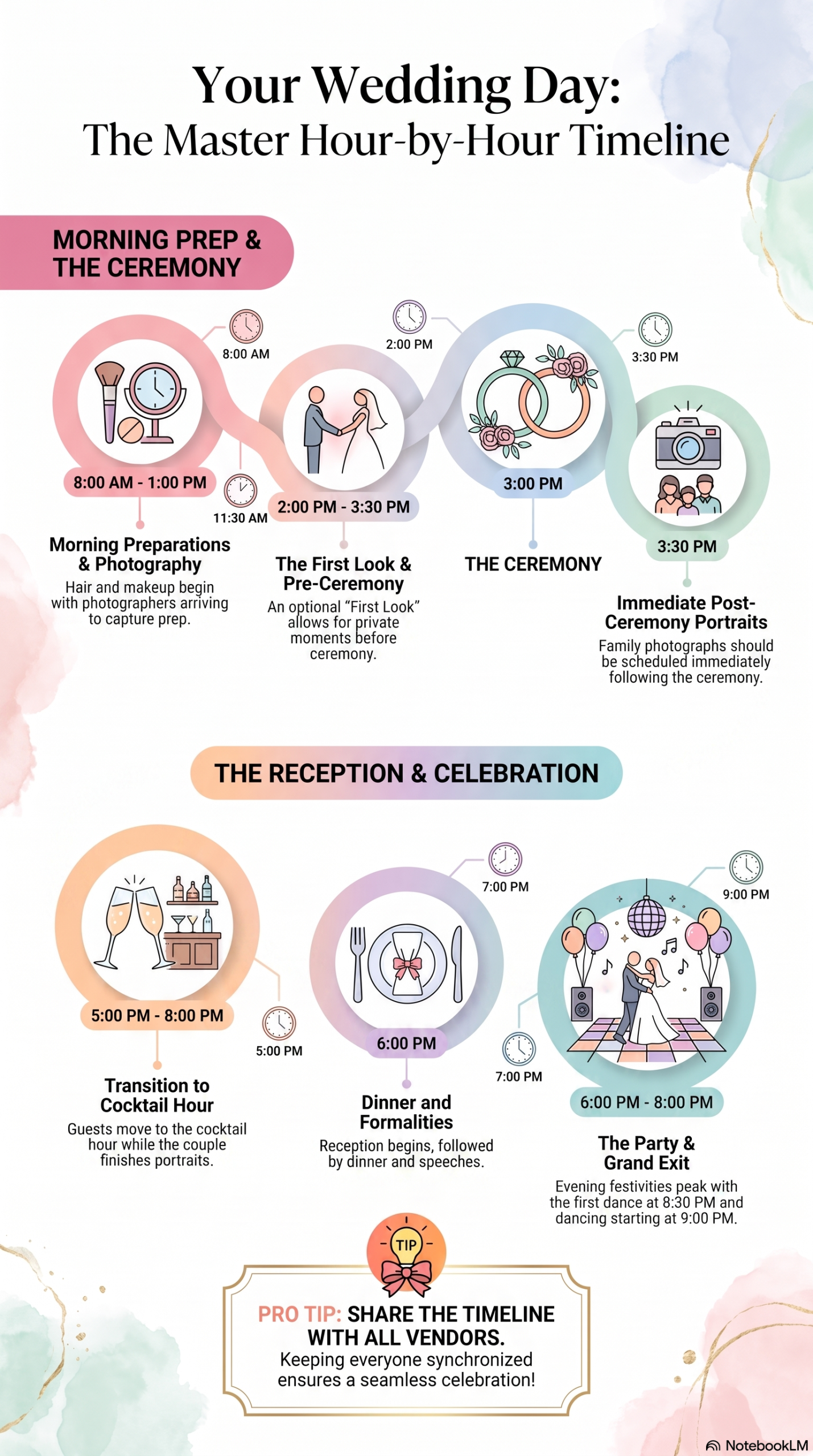
Although every celebration is unique, a typical schedule may look like this:
| Time | Activity |
|---|---|
| 8:00 AM | Hair and makeup begin |
| 11:30 AM | Photographer arrives |
| 1:00 PM | Getting ready photos |
| 2:00 PM | First look (optional) |
| 3:00 PM | Ceremony |
| 3:30 PM | Family photographs |
| 5:00 PM | Cocktail hour |
| 6:00 PM | Reception begins |
| 7:00 PM | Dinner |
| 8:00 PM | Speeches |
| 8:30 PM | First dance |
| 9:00 PM | Dancing |
| 10:00 PM | Cake cutting |
| Late Evening | Grand exit |
Share the finalized timeline with every vendor several days before the wedding.
The Day Before Your Wedding
Avoid scheduling a long list of errands.
Instead, use the day to relax and prepare mentally.
Take time to:
- Steam your wedding attire if needed.
- Pack everything you’ll need.
- Charge electronic devices.
- Eat balanced meals.
- Stay hydrated.
- Get enough sleep.
Most importantly, resist the temptation to solve problems that can wait until after the wedding.
TIP
Your planning is complete—trust the work you’ve already done.
On Your Wedding Day
Once your wedding day arrives, your role changes.
You are no longer the planner.
You are the bride or groom.
Allow your planner, coordinator, family members, and vendors to manage logistics while you focus on celebrating.
Unexpected moments happen at nearly every wedding.
A delayed delivery, changing weather, or small scheduling adjustment rarely affects the memories that matter most.
Guests won’t remember every decoration or timeline adjustment.
They’ll remember your happiness, your laughter, and the atmosphere you created together.
Common Wedding Planning Mistakes
Many wedding challenges can be avoided with careful preparation.
Some of the most common mistakes include:
- Starting planning too late.
- Forgetting to include hidden costs in the budget.
- Inviting more guests than the budget allows.
- Booking vendors without reviewing contracts.
- Skipping dress alterations.
- Trying to please everyone.
- Ignoring backup plans for outdoor weddings.
- Leaving seating arrangements until the last minute.
- Overloading the wedding day schedule.
- Forgetting to enjoy the engagement period.
Perfection isn’t the goal.
Creating meaningful memories is.
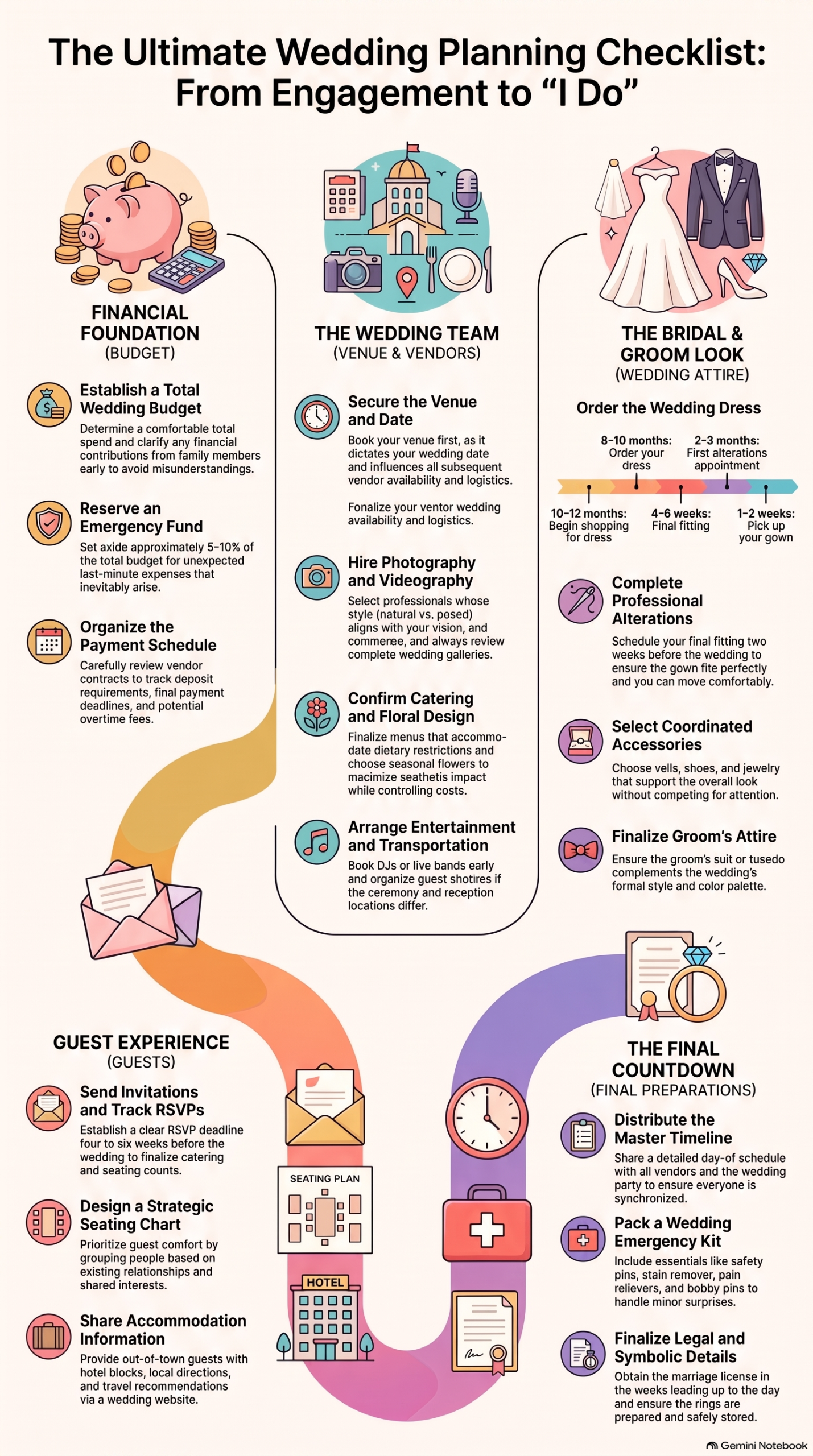
Wedding Planning Checklist
As your wedding approaches, confirm that you’ve completed each of the following:
Budget
- Wedding budget established
- Emergency fund reserved
- Payment schedule organized
Venue & Vendors
- Venue booked
- Photographer hired
- Videographer hired
- Caterer confirmed
- Florist confirmed
- Entertainment booked
- Transportation arranged
Wedding Attire
- Wedding dress ordered
- Alterations completed
- Accessories selected
- Groom’s attire finalized
Guests
- Invitations sent
- RSVPs collected
- Seating chart completed
- Accommodation information shared
Final Preparations
- Timeline distributed
- Emergency kit packed
- Marriage license obtained
- Rings prepared
- Vendor balances paid
Checking off each item provides confidence that nothing important has been overlooked.
Frequently Asked Questions
How long does it take to plan a wedding?
Most couples spend between 12 and 18 months planning a wedding, although smaller celebrations can often be organized in less time.
What should be booked first?
The wedding venue is usually the first major booking, followed by photographers, planners, and other high-demand vendors.
When should I buy my wedding dress?
Most brides begin shopping 10–12 months before the wedding to allow enough time for production and alterations.
How much should we budget for unexpected expenses?
A contingency fund of approximately 5–10% of your total budget is recommended.
Is hiring a wedding planner worth it?
For many couples, yes. Even a day-of coordinator can significantly reduce stress and ensure everything runs smoothly.
Can I plan a wedding myself?
Absolutely. With a realistic timeline, careful budgeting, and organized checklists, many couples successfully plan their own weddings.
Final Thoughts
Planning a wedding is about far more than organizing an event—it’s about creating one of life’s most meaningful celebrations. While there will always be countless decisions to make, remember that every choice should support the experience you want to share with your partner, family, and friends.
No wedding is completely perfect, and it doesn’t need to be. The moments you’ll treasure most won’t come from flawless centerpieces or perfectly timed schedules. They’ll come from heartfelt vows, joyful laughter, emotional embraces, and the people who gathered to celebrate your new beginning together.
Approach the planning process with patience, flexibility, and excitement. Stay organized, trust the professionals you’ve chosen, and don’t forget to enjoy the journey. Long after the flowers have faded and the music has ended, the memories of your wedding day will remain—and thoughtful planning is what helps create them.